
DID YOU FORGET TO TURN IN YOUR GREY TRANSPONDER AFTER YOU RACED THIS SEASON?
Please send an email to megan@swagger.us for instructions regarding how to get it back to us.
THANK YOU FOR A GREAT 2026 SERIES!

2ND Elizabeth CASTANO (One Hart Racing - Nashville Local Cycling) 1591 pts
3RD Elizabeth HARDEN (Kingdom Elite Racing) 1537 pts
4TH Rebecca LANG (Team Winston-Salem - FLOW) 1518 pts
5TH Shannon KOCH (Kingdom Elite Racing) 1370 pts
6TH Andrea CANTU (One Hart Racing - Nashville Local Cycling) 1287 pts
8TH Heidy PRADERAS (Kingdom Elite Racing) 1203 pts
9TH Emma FROST (Piedmont) 1174 pts
10TH Amanda ALSTON (One Hart Racing - Nashville Local Cycling) 1119 pts

PRO WOMEN D1 TEAM COMPETITION
1ST Kingdom Elite Racing 6024 pts
2ND One Hart Racing - Nashville Local Cycling 5524 pts
3RD Team Winston-Salem - FLOW 4974 pts
4TH United Cycling Women 4920 pts
5TH Caldera Medical x Aurea Racing 3651 pts

2ND Bryan GOMEZ (Foundation Cycling New York) 1839 pts
3RD Marcos MENDEZ (Foundation Cycling New York) 1836 pts
4TH Preston EYE (Clif Family Drifters Cycling) 1776 pts
5TH Johan GOMEZ (LA PARRILLA - ARIAS RACING) 1483 pts
6TH Jordan PARRA (Foundation Cycling New York) 1442 pts
8TH Lucas BOURGOYNE (Team Cadence Cyclery p/b Waldo Racing) 1429 pts
9TH Lucas GADAY (Foundation Cycling New York) 1344 pts
10TH Cade BICKMORE (Team Cadence Cyclery p/b Waldo Racing) 1296 pts

PRO MEN D1 TEAM COMPETITION
1ST Foundation Cycling New York 6739 pts
2ND Team Cadence Cyclery p/b Waldo Racing 5290 pts
3RD One Hart Racing 3517 pts
4TH Team Winston-Salem - FLOW 3300 pts
5TH The Racing Division p/b PACE Coaching 3266 pts
6TH Newtype Cycling 2788 pts
7TH Scottish Cycling 1707 pts
2026 SERIES EVENT RESULTS




USA CRITS 2026: A Season That Proved American Criterium Racing Is Still Alive and Thriving
For eight days this spring, downtown streets across the Southeast transformed into high-speed theaters of chaos, tactics, community celebration, and elite athleticism as the 2026 USA CRITS series delivered one of its most compelling seasons in recent memory.
From the opening laps in Anniston, Alabama, to the rain-soaked finale in Winston-Salem, North Carolina, the 17th edition of the USA CRITS series showcased everything that makes American criterium racing unique: technical courses, aggressive racing, packed city centers, team strategy, and riders willing to risk everything for a wheel-length advantage at 35 miles per hour.
As the popularity of gravel races and gran fondo rides grows, USA CRITS once again proved there is still a deep appetite for fast, spectator-friendly cycling in the United States.
The 2026 calendar featured eight races across four southeastern states, backed by a total prize purse of more than $200,000 and renewed organizational energy from Swagger LLC. The series also leaned heavily into festival atmospheres and city partnerships, emphasizing that criteriums succeed not simply as bike races, but as downtown events. According to preseason reporting, organizers expanded support for teams while introducing initiatives like the Global Challenge at Athens Twilight and an enhanced D1 TEAM program aimed at strengthening domestic competition.
The season opened on April 11 at the Sunny King Criterium in Anniston, where Laurel Rathbun (Caldera Medical x Aurea Racing) and Marcos Mendez (Foundation Cycling New York) claimed the first elite victories of the year. The redesigned uphill finishing straight immediately established the tone for the season: aggressive, technical, and difficult to control. Foundation Cycling New York quickly emerged as a dominant force in the men’s competition, while the women’s field revealed extraordinary depth from the very beginning.
One week later, the series arrived in Athens, Georgia, for the legendary Athens Orthopedic Clinic Twilight, one of the crown jewels of American criterium racing. The atmosphere in Athens once again demonstrated why Twilight remains iconic after more than four and a half decades while also reflecting USA CRITS’ increasing emphasis on turning races into cultural festivals rather than standalone sporting events. Massive crowds lined the barriers deep into the night while elite fields attacked relentlessly on the famous fast corners through downtown with Kendall Ryan (Caldera Medical x Aurea Racing) and Lucas Bourgoyne (Team Cadence Cyclery p/b Waldo Racing) taking top podium finishes.
As the series moved deeper into Georgia and the Carolinas, clear storylines began to emerge.
In the women’s competition, Liza Ray (Kingdom Elite Racing) established herself as one of the revelations of the season. Her dominant victory in LaGrange gave her critical momentum in the overall standings and ultimately became the foundation of her eventual series championship. Yet the women’s field never lacked challengers. Skylar Schneider (L39ION of Los Angeles) surged through the South Carolina rounds with back-to-back victories in Greenville and Spartanburg, while Elizabeth Castaño (One Hart Racing - Nashville Local Cycling) consistently collected points and podiums to remain in contention through the weekend, which concluded in Suwanee, Georgia.
Then came Marlies Mejías.
By the time the series reached Winston-Salem for its closing doubleheader weekend — the Streets of Fire Criterium followed by the Gears & Guitars Criterium — Mejías was riding at an extraordinary level. The Cuban rider for Virginia’s Blue Ridge TWENTY28 stormed to victories throughout Memorial Day weekend racing, including wins at Streets of Fire and the series finale itself. Her solo victory in the final race became one of the defining performances of the season, attacking early and holding off the field in difficult wet conditions.
Still, consistency ultimately mattered more than late dominance. Ray’s relentless accumulation of points throughout the spring secured the overall women’s title ahead of Castaño and Elizabeth Harden, Ray’s Kingdom Elite Racing teammate.
The men’s series unfolded with even tighter margins.
Marcos Mendez (Foundation Cycling New York) appeared early to be the strongest rider in the competition after wins in Anniston and LaGrange, while Lucas Bourgoyne (Team Cadence Cyclery p/b Waldo Racing) electrified Athens and later returned to form with a victory at the High Line Criterium in Suwanee. Bryan Gomez (Foundation Cycling New York) also surged late in the season, claiming victory at the Streets of Fire Criterium and pulling himself firmly into overall contention entering the finale weekend.
Yet the defining characteristic of the men’s championship became consistency rather than headline victories.
Leonel Rodriguez (MC CYCLING TEAM) rarely appeared far from the front all season, collecting points through intermediate sprints, lap leadership, and steady finishes. While other riders traded spectacular wins, Rodriguez quietly built the strongest cumulative campaign in the series, and he did it as a solo rider. By the time the final laps unfolded in Winston-Salem, his consistency delivered the overall championship by a narrow margin over Gomez and Mendez.
Beyond the individual battles, the 2026 season also marked a significant evolution in the USA CRITS D1 TEAM competition, which increasingly became one of the defining strategic elements of the series.
The D1 TEAM program was designed to strengthen the professional side of domestic criterium racing by providing participating teams with travel stipends, guaranteed event access, livestream promotion, and eligibility for a dedicated overall team competition purse. In 2026, the D1 TEAM overall competition awarded $10,000 each for the men’s and women’s divisions, while participating teams could also receive up to $5,500 in travel support across the season.
Unlike a traditional team classification based solely on stage results, USA CRITS utilized a layered points structure that rewarded consistency, aggression, and depth throughout every race weekend. Riders earned 50 start points simply for taking the line, while additional points were available for lap leads, intermediate sprints, and final finishing positions. Sprint points were awarded at designated intervals during each race — typically Lap 5, mid-race, and five laps to go — using a 10-7-5-3-2 distribution for the top five riders across the line. Final race results then delivered substantial points, with victories worth 200 points and points extending all the way down.
The D1 TEAM competition added another tactical layer by counting only the top four scoring riders from each registered D1 squad at every event. Teams were required to field at least four riders and could enter a maximum of six per race, meaning roster depth and collective strategy often mattered more than individual brilliance alone.
That structure helped create one of the season’s most dominant storylines on the men’s side, where Foundation Cycling New York asserted control nearly from the opening weekend. Powered by Bryan Gomez, Marcos Mendez, Jordan Parra, and Lucas Gaday, the squad combined stage victories with relentless point accumulation to win the men’s D1 TEAM title with 6,739 points. Team Cadence Cyclery p/b Waldo Racing finished second thanks to strong performances from Lucas Bourgoyne and Cade Bickmore, while One Hart Racing secured third overall.
The women’s D1 TEAM competition proved equally compelling. Kingdom Elite Racing emerged as the series’ benchmark organization, placing multiple riders consistently near the front throughout the spring. Led by overall individual champion Liza Ray alongside Elizabeth Harden, Shannon Koch, and Heidy Praderas, Kingdom Elite Racing captured the women’s D1 TEAM title with 6,024 points. One Hart Racing – Nashville Local Cycling finished second after a season defined by consistency from Elizabeth Castaño and Andrea Cantu, while Team Winston-Salem – FLOW completed the podium.
The success of the D1 TEAM format reflected USA CRITS’ broader effort to professionalize the series while still preserving the accessibility and community feel that has long defined American criterium racing. Rather than simply rewarding isolated individual performances, the structure incentivized teams to race aggressively from start to finish, animate intermediate sprints, and bring full rosters to every city on the calendar.
In many ways, the D1 TEAM competition became the connective tissue of the 2026 season — transforming USA CRITS from a collection of standalone races into a cohesive national series with genuine tactical continuity from April through Memorial Day weekend.
Another major boost for the series in 2026 came through expanded livestream coverage on Outside TV and Outside Watch, which helped bring USA CRITS to a national audience beyond the barriers. Every round of the series was broadcast live, giving fans throughout the world access to elite American criterium racing in real time. The partnership added a more professional presentation to the series while increasing visibility for riders, teams, sponsors, and host cities alike. For a discipline built on speed, atmosphere, and nonstop action, the livestream coverage became a critical part of USA CRITS’ continued growth and relevance in the modern cycling landscape.
Beyond the racing itself, the 2026 season also highlighted broader questions about the future of American cycling.
The absence of Speed Week from the calendar illustrated the financial and logistical fragility that still surrounds domestic road racing. Organizers acknowledged shifting city priorities and sponsorship realities, particularly with many municipalities preparing for the 2026 FIFA World Cup. Yet USA CRITS also demonstrated resilience by continuing to evolve rather than retreat.
Crowds remained strong throughout the series, livestream coverage expanded, and online discussion around criterium racing continued to show enthusiasm among dedicated fans and local cycling communities alike. In many cities, criteriums remain among the few surviving forms of accessible road racing capable of attracting both amateur riders and casual spectators.
That accessibility remains central to the discipline’s appeal. Unlike sprawling road races or remote gravel events, criteriums place fans directly against the barriers. Spectators can watch every attack, every crash, every sprint, and every tactical move unfold repeatedly in front of them over the course of an hour. The result is a form of racing uniquely suited to urban American environments.
And in 2026, USA CRITS leaned fully into that identity.
The series blended professional racing with concerts, community rides, running events, kids programming, and downtown festivals. In Athens, Greenville, Spartanburg, Winston-Salem, and elsewhere, the races became citywide celebrations rather than isolated sporting contests.
That may ultimately be the lesson of the 2026 season.
American criterium racing does not survive because it resembles European road racing. It survives because it has become something distinctly American: part festival, part street party, part professional sport, and part community gathering.
The riders still race at extraordinary speeds. The tactics remain brutally sophisticated. The crashes still come with terrifying suddenness. But the long-term sustainability of USA CRITS increasingly depends on the thousands of spectators lining barriers, local businesses filling sidewalks, and cities embracing the races as civic events.
In that respect, the 2026 season may have been one of the strongest statements yet that criterium racing in America is far from dead.
It is evolving.
And for eight exhilarating days this spring, it was spectacular.

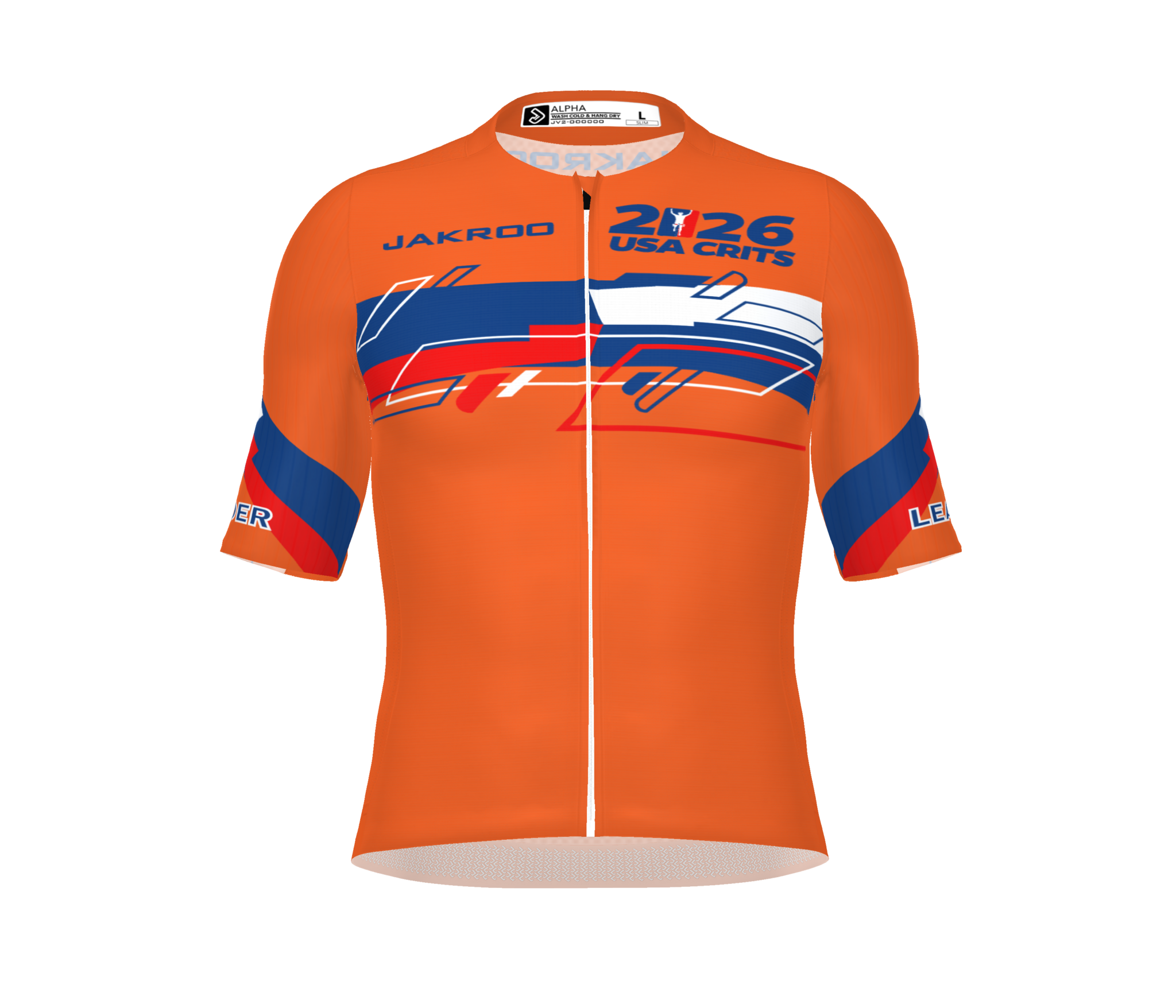
USA CRITS is proud to call Jakroo our
Official Jersey Partner